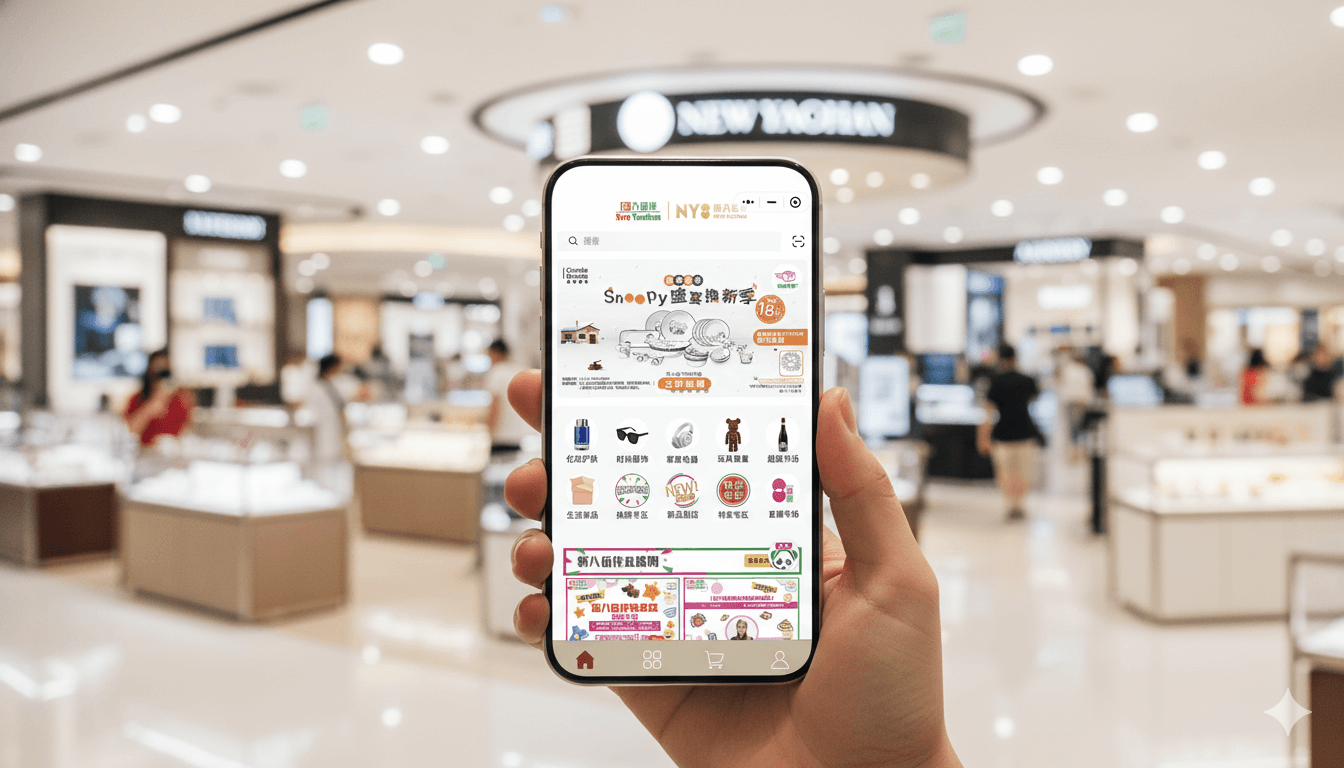
Background: From Passive Reach to Active Participation
In digital marketing, traditional one-way advertising is no longer enough to hold user attention. Brands need experiences that invite people to participate. Nike Training Club used a WeChat Mini Program to turn fitness content into an interactive challenge system, creating a strong example of task-based brand engagement.
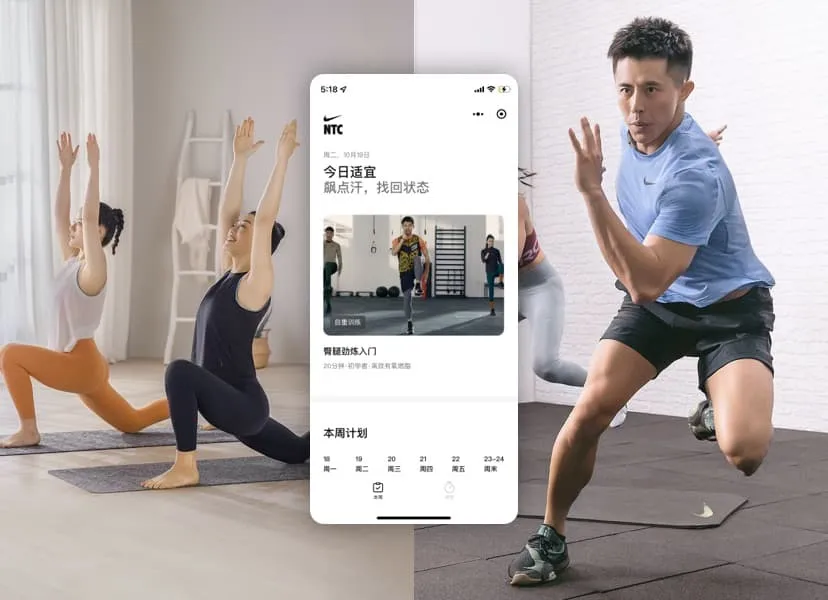 Nike Training Club WeChat Mini Program interface
Strategy: Three Core Mechanisms
1. Task Challenges and Gamified Progression
NTC organized training into clear tasks and weekly schedules. Users could choose yoga, cardio, core training, stretching, and other guided sessions. The structure reduced friction for beginners while giving advanced users a reason to keep progressing.
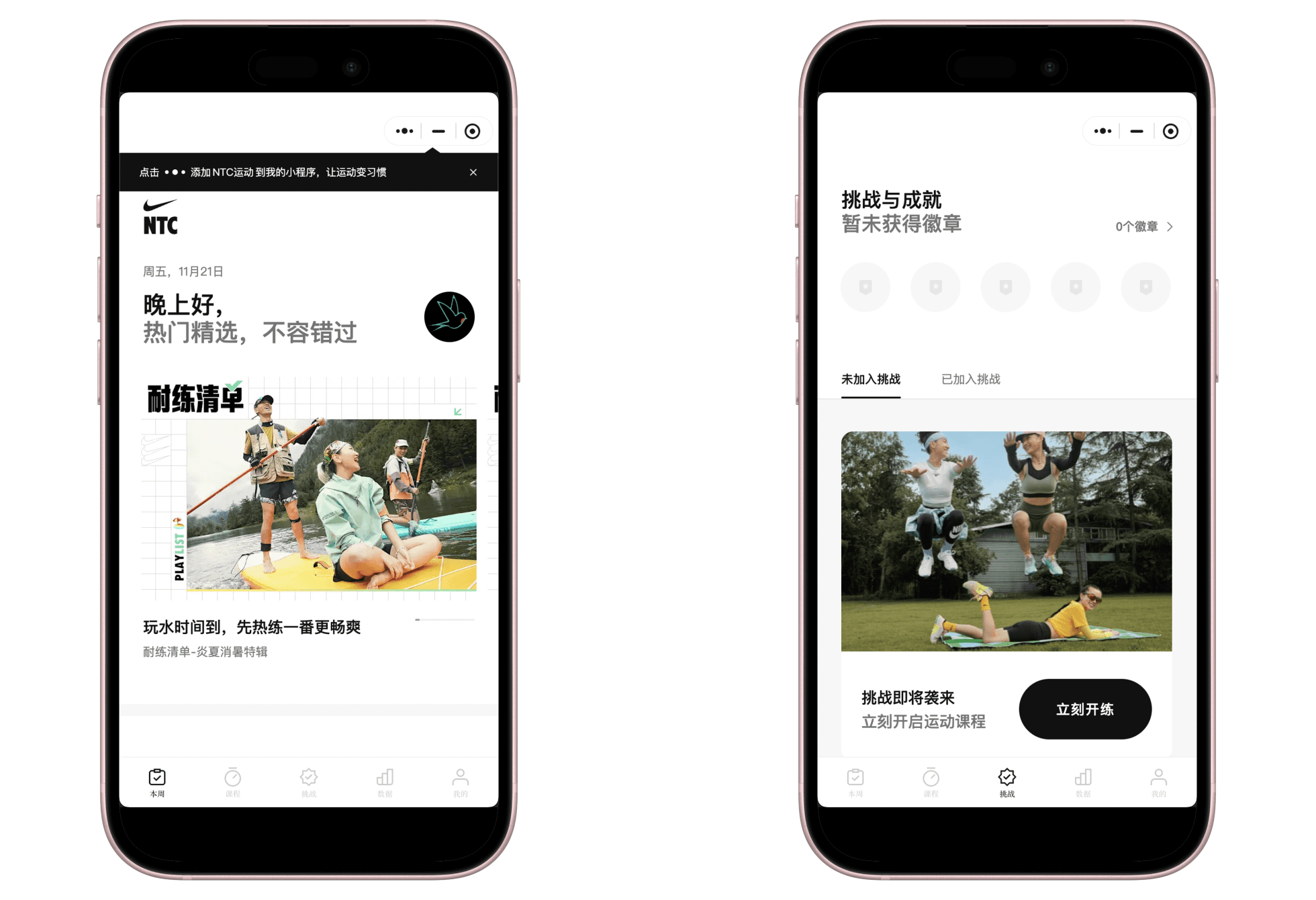
 NTC training challenge screen
The experience worked because it translated exercise into a loop of goal, action, feedback, and progress. Completion badges, training records, and visible achievements helped users feel momentum after every session.
2. WeChat Mini Program as the Growth Channel
Nike chose WeChat because it removes installation friction and fits naturally into Chinese users' daily digital behavior. Users can enter through search, QR codes, sharing links, or campaign placements without downloading a separate app.
 WeChat Mini Program interaction advantages
The mini program also supports social sharing and private traffic operations. Training results, campaign pages, and product recommendations can all sit inside the same ecosystem, helping the brand build repeat engagement rather than one-off exposure.
3. Content Ecosystem, Not Just a Tool
NTC is not only a workout timer. It combines training plans, expert advice, health content, and product touchpoints into a broader fitness ecosystem.
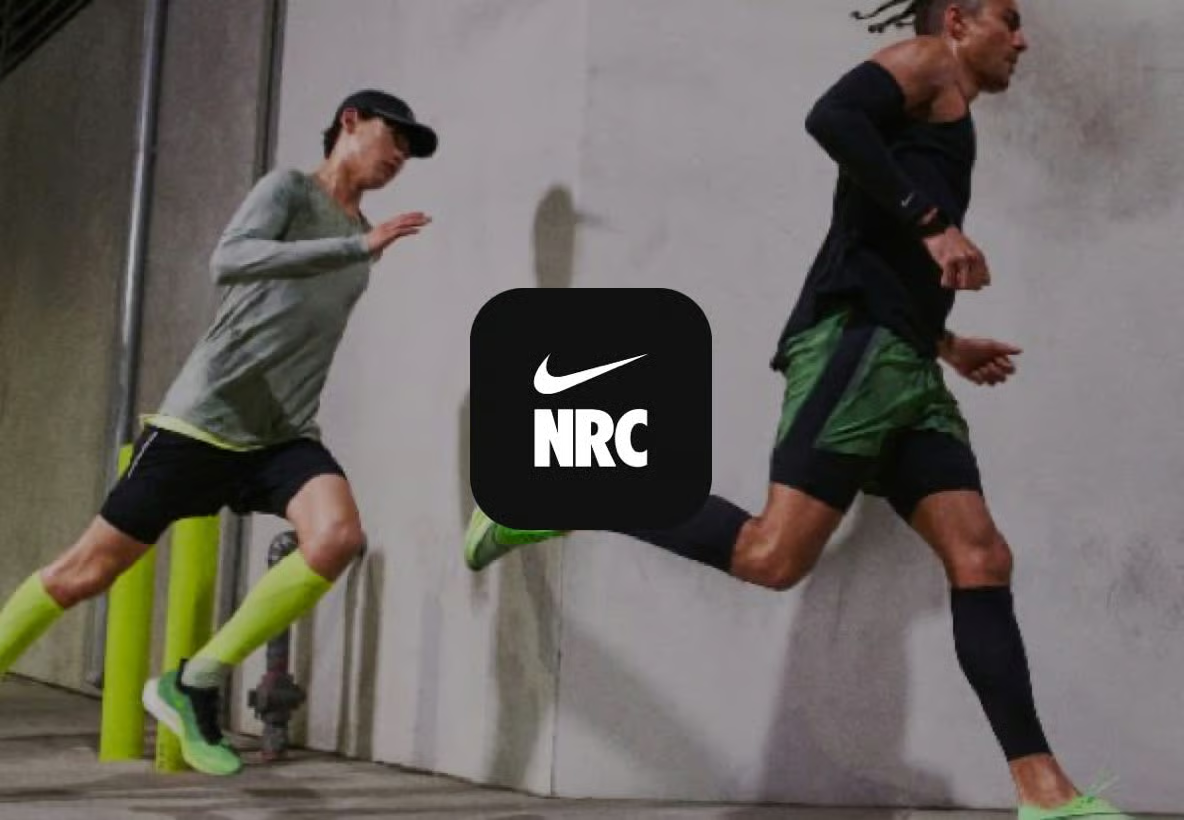 NTC content ecosystem
This matters because users return for value, not advertising. When a brand helps customers solve a real problem, it earns permission to recommend relevant products later.
Why Interactive Marketing Worked for Nike
Solving the Attention Problem
A static ad might receive a few seconds of attention. A training session can hold a user's focus for minutes. That difference changes the quality of the brand interaction.
 User participation in fitness interaction
The campaign moved users from watching to doing. That deeper participation improved brand memory and created a stronger emotional connection with Nike's training expertise.
Building a DTC Data Loop
Interactive campaigns also create useful first-party data. Training preferences, session frequency, challenge completion, and content engagement can inform user segmentation and future recommendations.
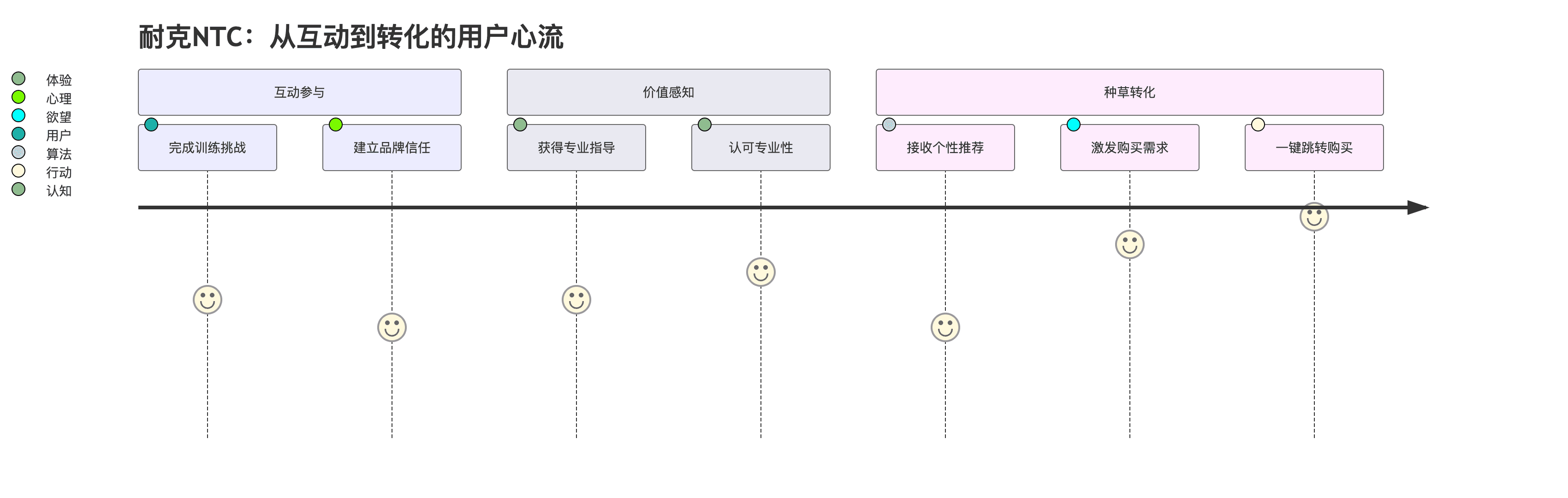 Interactive marketing conversion path
The journey can be summarized as:
- User joins a training challenge.
- Nike provides professional guidance.
- The user builds trust in the brand's expertise.
- Relevant products are recommended based on context.
- The mini program can guide the user toward purchase or membership conversion.
Business Value
Interactive task systems create value across the whole funnel:
| Value | Impact |
|---|---|
| Higher participation | Users spend more time with the brand than they would with static ads. |
| Better retention | Weekly tasks and challenges encourage repeat use. |
| More accurate data | Behavior data supports personalized content and product recommendations. |
| Stronger social spread | Users can share training results and achievements. |
| Clearer conversion path | Content, engagement, and commerce can be connected in one ecosystem. |
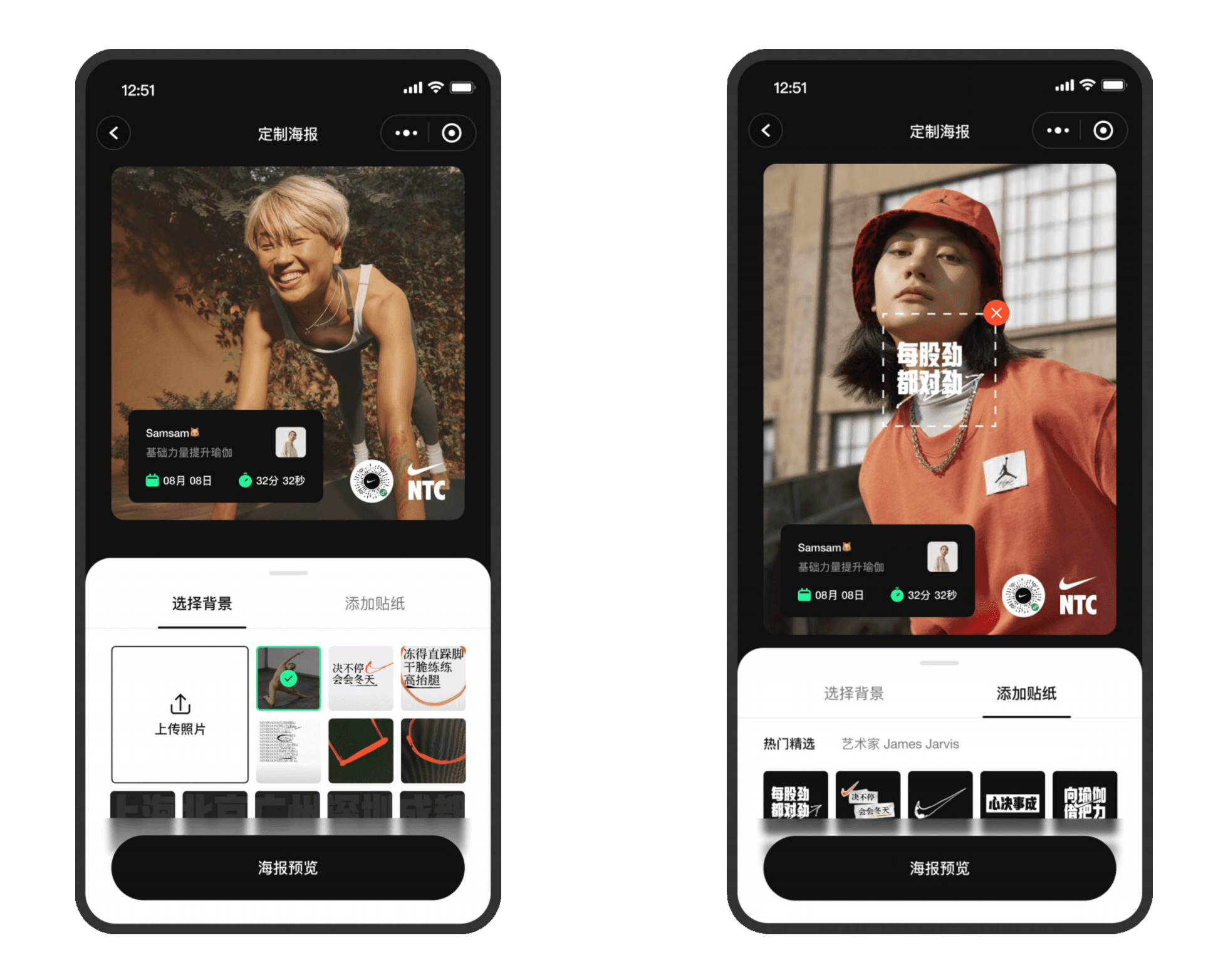 User sharing interface
Lessons for Brands
The Nike NTC case shows that interactive marketing should be designed as a product experience, not a short-lived promotion. The strongest results come when brands combine useful content, gamified participation, social sharing, and a clear path to conversion.
For brands planning a similar campaign, the priorities are clear: lower the entry barrier, give users a reason to return, make progress visible, and connect each interaction to long-term customer operations.