
Dior Atelier of Dreams: 3D Interactive Marketing Case Study
Overview
Dior's Atelier of Dreams campaign demonstrates how a luxury brand can use 3D interaction to turn a digital visit into an immersive brand journey. Instead of presenting products through flat banners or standard product grids, the campaign built a virtual dream space where users could explore, discover, and interact with the brand story.
The result was a richer experience that supported both brand storytelling and commercial intent.
Why 3D Interaction Fits Luxury
Luxury marketing depends on atmosphere, detail, and emotional memory. A standard mobile page can communicate information, but it often fails to reproduce the sense of discovery associated with a boutique, exhibition, or pop-up experience.
Dior's 3D approach solved that gap by giving users a spatial journey. They could move through a designed environment, encounter product moments, and feel that the campaign had a world of its own.
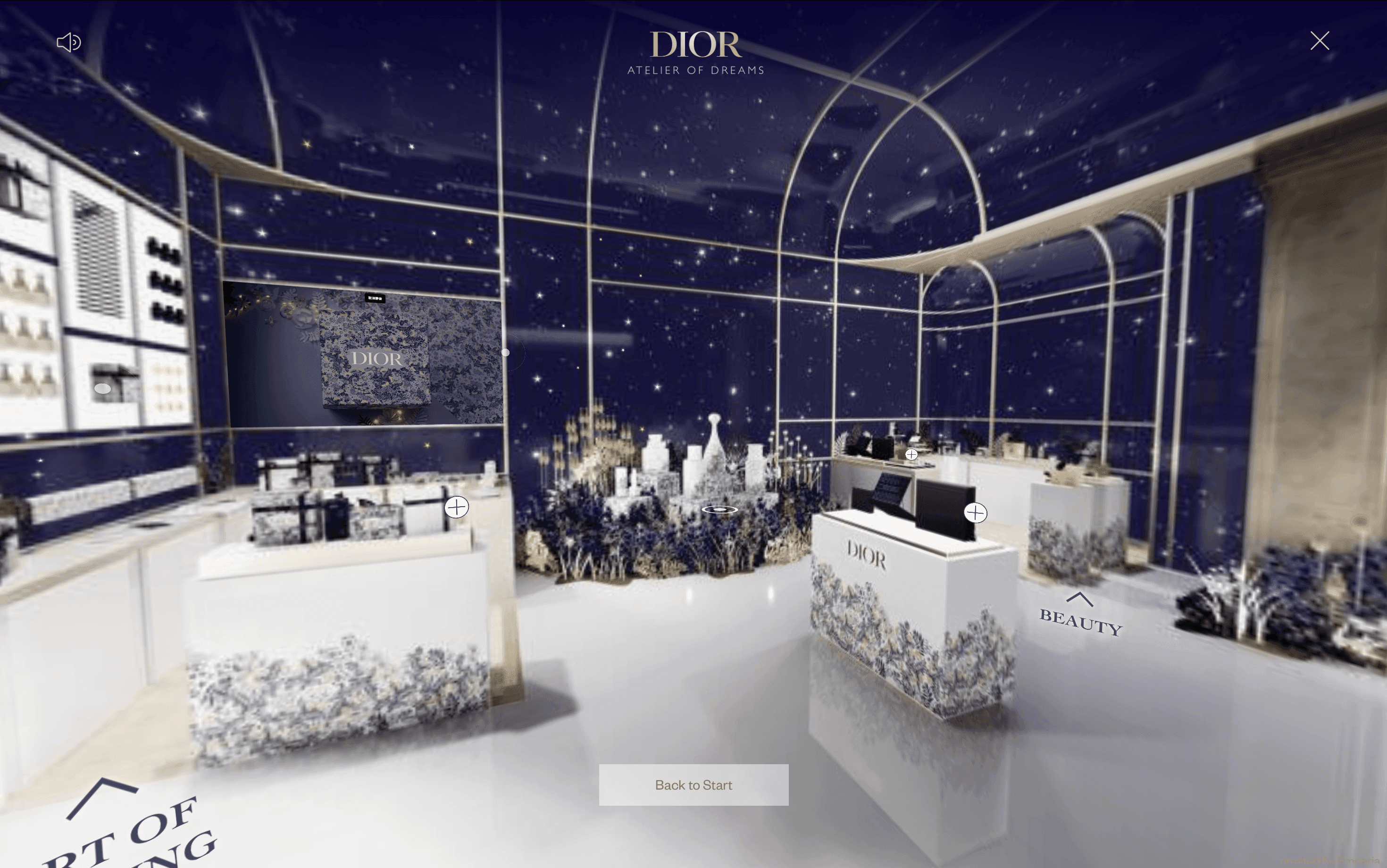 Dior virtual interactive scene
Experience Design
The campaign used several design principles that are especially relevant for premium brands:
| Design choice | Brand effect |
|---|---|
| Immersive 3D space | Creates a stronger sense of occasion than a static campaign page. |
| Guided exploration | Lets users discover content at their own pace while still following a curated path. |
| Product placement inside the world | Makes products feel like part of the story rather than isolated sales units. |
| Visual consistency | Protects the brand's tone while using new digital formats. |
| Lightweight interaction | Keeps the experience accessible on mobile devices. |
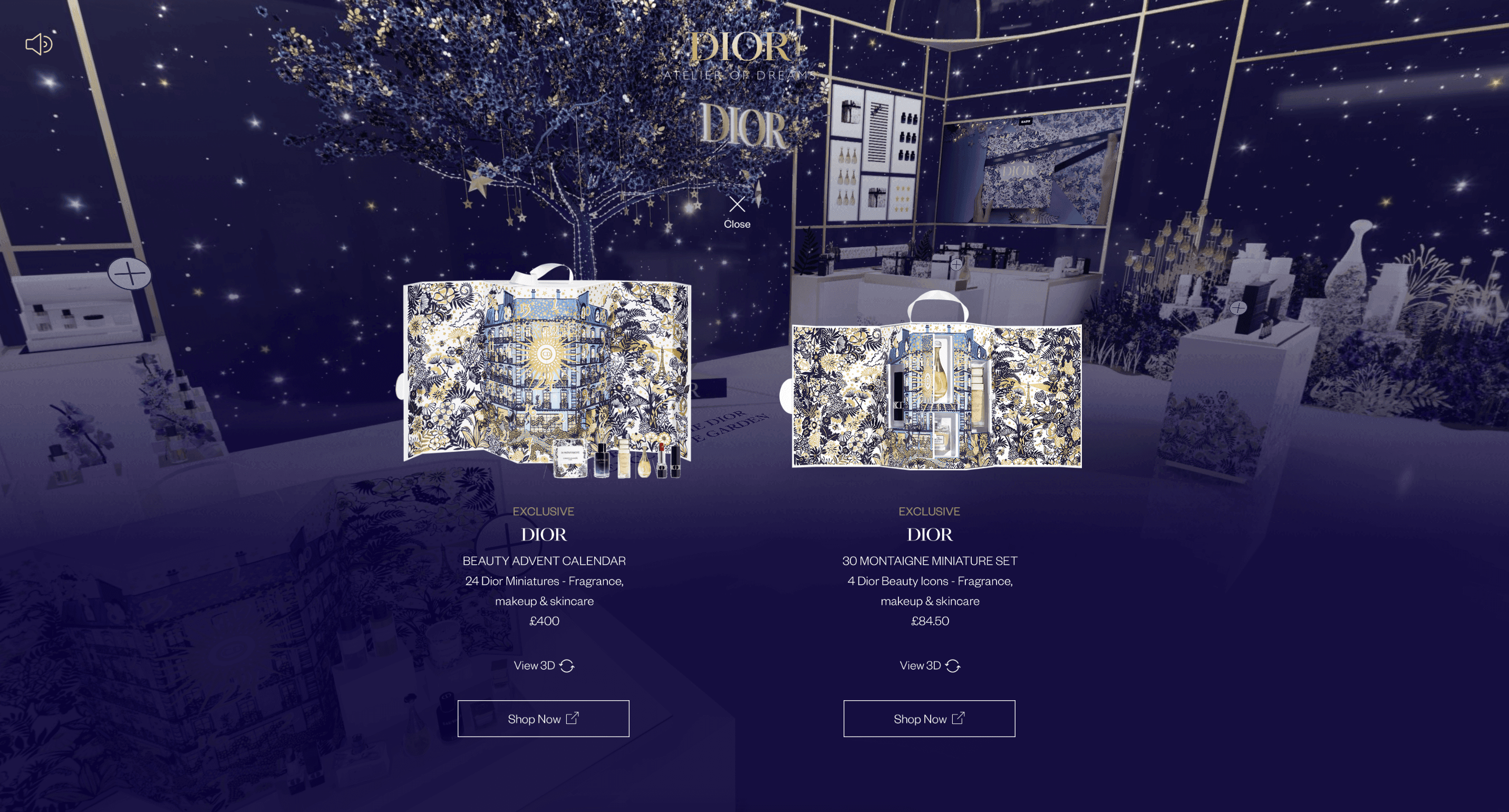 Dior digital brand storytelling interface
Marketing Value
For a brand like Dior, the value of a 3D campaign is not only novelty. It helps extend the emotional depth of a physical retail experience into digital channels.
The campaign supports:
- Stronger brand recall through immersive visuals.
- Longer engagement time because users actively explore the scene.
- Better storytelling around seasonal collections and hero products.
- A smoother bridge between awareness, interest, and purchase intent.
- More shareable content for social platforms and media coverage.
What Other Brands Can Learn
A 3D campaign should not be built only to look impressive. It needs to serve a clear user journey. Dior's case works because the visual world, product story, and interaction model all support the same brand message.
For brands considering similar work, the key questions are:
- What should the user feel after entering the experience?
- Which products or stories deserve interactive treatment?
- How can the experience remain smooth on mobile?
- Where does the journey connect to CRM, commerce, or appointment booking?
Conclusion
Dior's Atelier of Dreams shows that immersive marketing can bring luxury storytelling closer to the feeling of a real-world brand installation. When executed with restraint and clear purpose, 3D interaction gives premium brands a way to create memorable digital journeys without sacrificing elegance.